Job geometry comes first
- Can the machine sit directly below the task, or does it need to straddle racks, rows, or bleachers?
- What is the working height and required platform capacity?
- How much aisle width and turning space exist from door to work zone?
For wide, flat interior bays, a slab electric scissor with non-marking tires usually fits. For unfinished grades or soggy soil outside, a rough-terrain scissor with larger tires and stabilizing systems becomes the comparison point.
How Lexington’s conditions affect selection
- Rolling ground and karst pockets can leave exterior surfaces uneven; outdoor scissor work often depends on rough‑terrain frames and, where specified by the unit, outriggers.
- The regional climate brings wet seasons and freeze‑thaw cycles that soften topsoil. Four‑wheel‑drive capability and higher ground clearance are common needs for exterior maintenance.
- Local institutional and commercial buildings have long interior runs with finished floors; compact electrics reduce floor loading and aisle conflicts.
Narrowing the category by measurements
- Interior access: check doorway clearance, floor load limits, and turning radius. Electric slab units favor lower weight and tighter turns.
- Exterior access: note slope, soil firmness, and approach distances. Rough‑terrain units prioritize wider stance, treaded tires, and higher platform capacities.
- Platform work: measure the heaviest tools or materials expected. Higher capacities help in warehouse relamping, sign installs, and mechanical service.
Common Lexington use cases
- Facilities and healthcare maintenance needing quiet, fume‑free operation indoors point to Electric Scissor Lift Rental.
- Industrial sites, distribution yards, and arena upkeep with variable grades lean toward Rough Terrain Scissor Lift Rental.
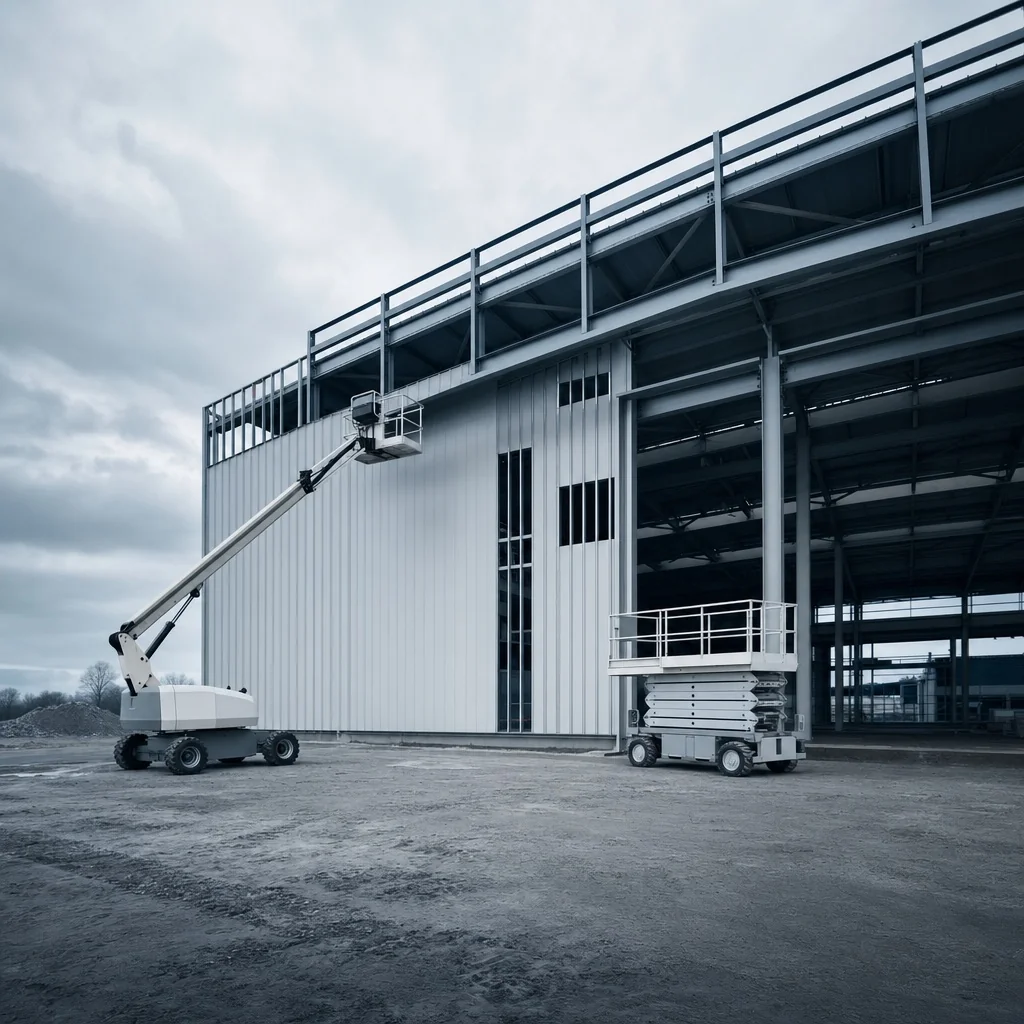
- When the task can’t be reached from directly below, compare scissor options with boom lifts on the Aerial Lift Rental overview.
When a scissor isn’t enough
If the work sits over obstacles—pipe runs, stalls, conveyors—or requires side reach, an articulating or telescopic boom may be more efficient. See Boom Lift Rental for outreach planning.