Layout and movement paths
- Map entry points for pedestrians, service carts, and forklifts. Narrow chokepoints near arena doors or loading docks can stall operations.
- Plan corners and returns around slopes to keep lines taut and reduce lean. Long straight runs over hills can look aligned on paper but wander in the field.
Lexington terrain and weather factors
- Soft ground after precipitation can loosen bases. Wider feet or site-stability factors improve bearing in grassy areas common around stables and campus lawns.
- Open, elevated areas can see stronger gusts. Actual wind conditions and the selected system’s instructions govern site-stability factors and bracing requirements.
- Karst-influenced terrain can hide voids near the surface. Walk the line to spot thin soils, drainage cuts, or sink-prone spots before finalizing routes.
Choosing panels and barricades
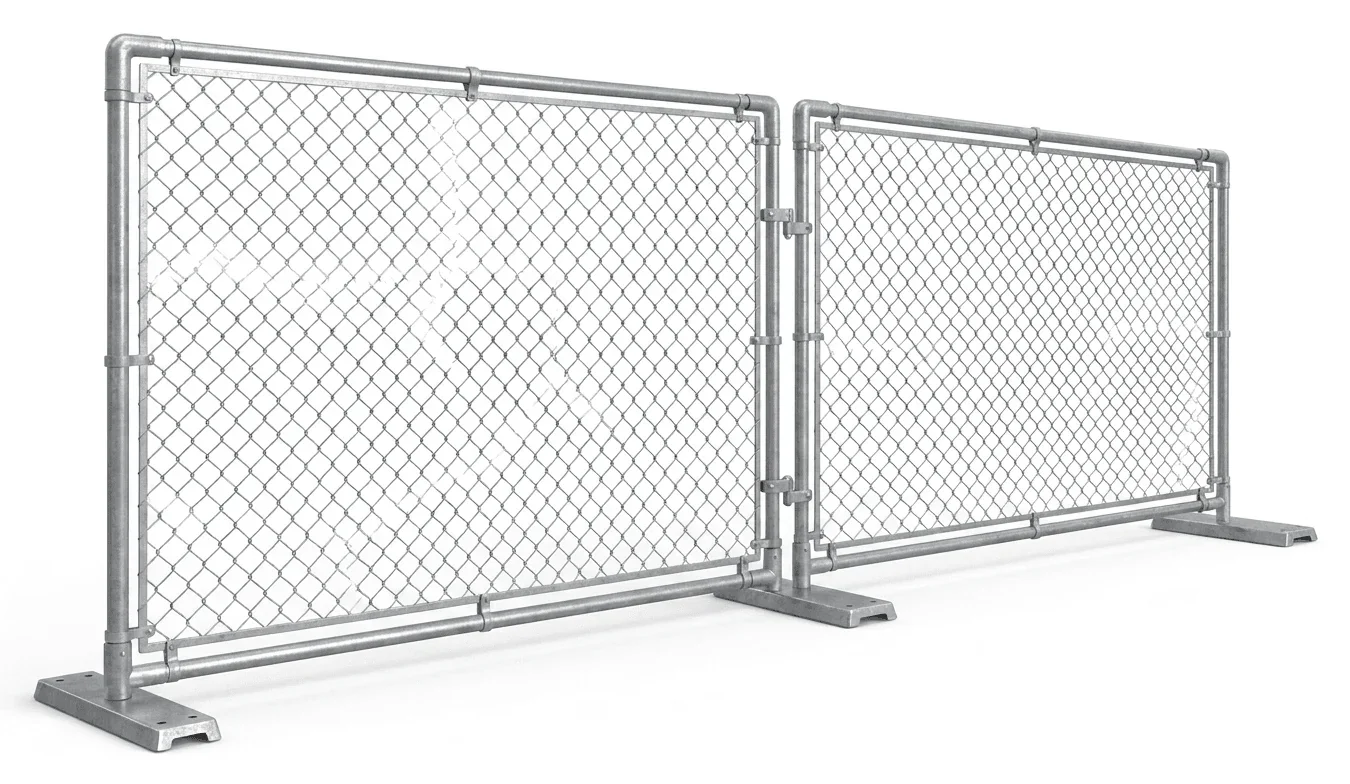
- Panel height and mesh: match to security level and visibility. Lower profiles suit interior crowd lanes; taller panels deter access along jobsite edges.
- Footprint and site-stability factors: larger bases help on turf and gravel. Where asphalt or concrete is available, weighted options reduce trip hazards.
- Gate modules: swing or slide gates should match the width of expected equipment, including /forklift-rental/ and /telehandler-rental/ when materials move through.
Surface and site-stability planning considerations
- Avoid placing bases in drainage swales where settling is likely after freeze–thaw cycles.
- On slopes, shorter panel runs with frequent returns resist creep better than very long straight lines.
- Near equestrian facilities, consider sightlines and noise paths so fencing manages movement without spooking animals.
Integrating with aerial work
If fencing protects lift zones, plan clearances: - Compact indoor lifts: /vertical-mast-lift-rental/ - Finished interior floors: /electric-scissor-lift-rental/ - Uneven exterior ground: /rough-terrain-scissor-lift-rental/ or /boom-lift-rental/