When an articulating boom is the right geometry
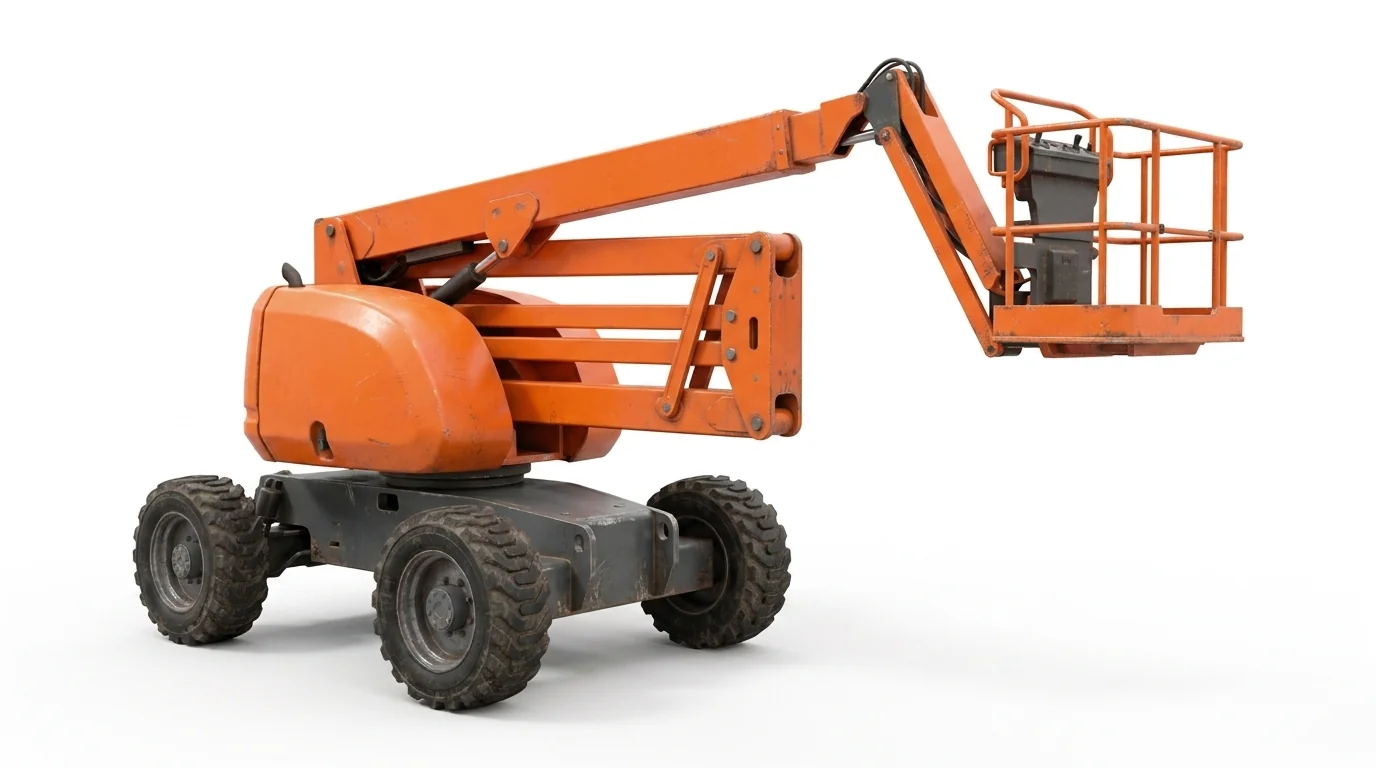
Use an articulating boom when the platform needs to snake around something: roof overhangs, racking, signs, skylight curbs, arena trusses, or equipment lines. The knuckle joint lets the jib rise above and then “elbow” over the obstacle. If the task is a straight shot with no interference, compare against a unit at /telescopic-boom-lift-rental/.
Key planning points that narrow the choice: - Height and outreach with clearance over the obstruction - Whether the chassis sits on slab, compacted gravel, turf, or uneven grade - Indoor vs. outdoor use and emissions limits near people or animals - Platform capacity needed for tools and materials
Lexington conditions that change setup
The city’s karst terrain and Bluegrass hills often put one tire higher than another and can hide soft pockets after wet weather. On exterior work at farm structures or industrial sites, rough‑terrain capability and proper outrigger or axle stance may be required by site procedures. For interior maintenance at large arenas or healthcare spaces, electric units with non‑marking tires and smaller tailswing reduce disruption.
Power source and tire configuration
- Electric articulating booms: Useful indoors where ventilation and floor protection matter. Shorter wheelbase options help in tight corridors. Cross‑shop with /vertical-mast-lift-rental/ for lighter, lower‑weight access when the reach need is modest.
- Diesel or hybrid rough‑terrain articulating booms: Better outside on variable ground and grassed areas common around training arenas and exterior façades. Four‑wheel drive and oscillating axles are typical on this class.
Access route and transport constraints
Measure the narrowest pinch point from staging to the work area: door widths, gate openings, aisle corners, and slab load ratings. In Lexington’s older masonry buildings and barn aisles, turn radius and machine weight can be the limiting factors more than height.
Common Lexington uses
- Up‑and‑over service of arena lighting and ventilation in tall barn rows
- Exterior envelope repairs at distribution buildings set on rolling pads
- MEP maintenance above interstitials or mezzanines without moving equipment
See related categories at /boom-lift-rental/ and /rough-terrain-scissor-lift-rental/ when the job is primarily vertical with fewer obstacles.