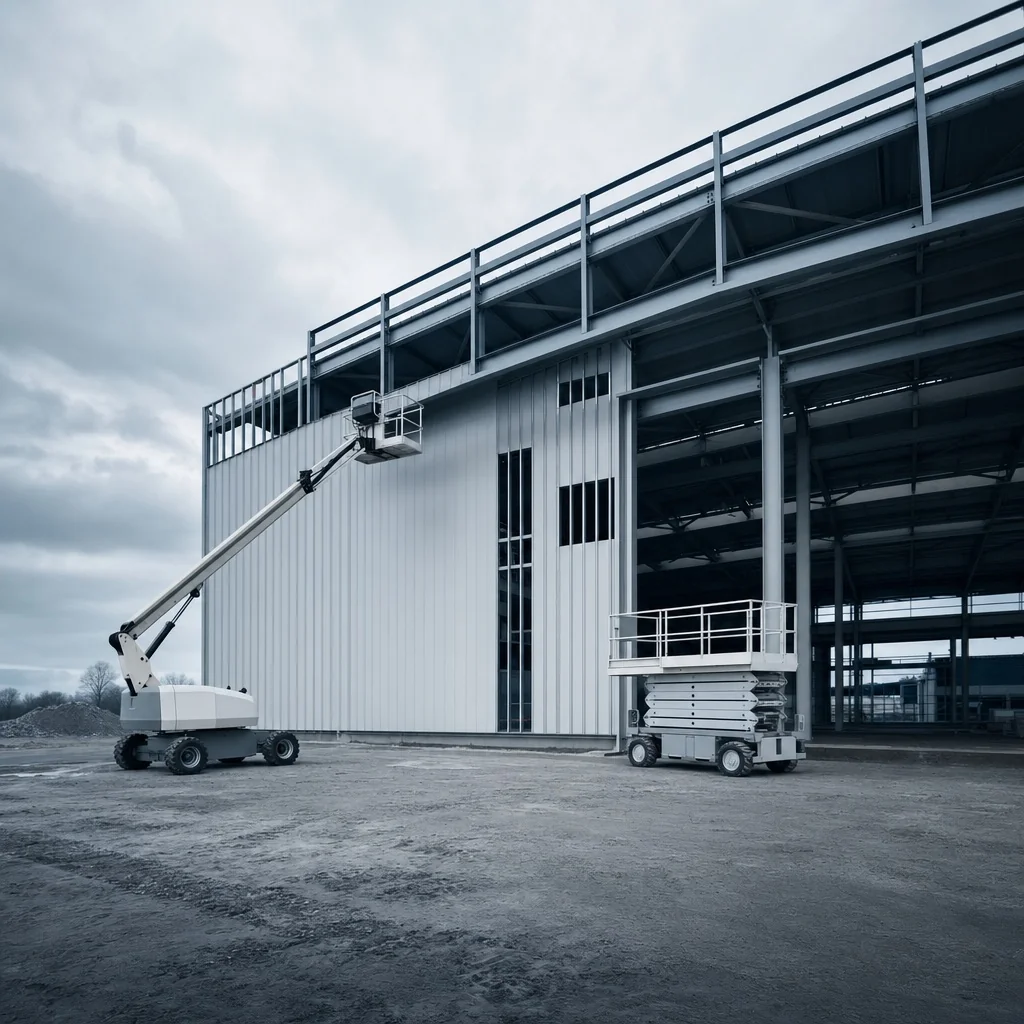
Start with job geometry
- Vertical-only vs. outreach: if obstacles block a straight-up path, consider /boom-lift-rental/ options—/articulating-boom-lift-rental/ for up-and-over, /telescopic-boom-lift-rental/ for long, direct reaches.
- Working height and platform capacity: tall interior tasks in arenas or gym-style spaces may fit /electric-scissor-lift-rental/ if floors are finished and flat; exterior façade or yard work may require /rough-terrain-scissor-lift-rental/.
- Can the machine sit below the task? If not, a compact /vertical-mast-lift-rental/ can fit through interior doors and work close to walls.
Lexington surfaces and approaches
- Rolling grades and karst-affected soils create uneven footing outdoors. Rough-terrain lifts and four-wheel-drive are often compared for yard work and barn exteriors.
- After freeze–thaw or heavy rain, turf and shoulders soften. Plan routes that stay on gravel where possible and confirm bearing strength where machines or site products will stage.
- Long approaches across campuses or industrial sites may limit machine width and turning radius at pinch points and gate openings.
Narrow the category by constraints
- Interior finish: sensitive floors and low noise requirements favor electric scissor or vertical mast units with non-marking tires.
- Platform capacity and material handling: where the task includes heavier components, compare lifts with higher capacities, or pair with /telehandler-rental/ or /forklift-rental/ for ground-to-platform staging.
- Staging support: jobs that run after dark or through outages may also need /generators-light-towers-rental/ for power and visibility, and /temporary-fencing-barricades-rental/ for safe work perimeters.
Equestrian and high-clearance spaces
Large indoor riding or training arenas often have high rooflines and soft base layers along the edges. Access from firmer side aprons can determine whether a scissor can reach, or if an articulating boom’s up-and-over path is necessary to avoid base materials.
Decision recap
- Confirm working height and whether there’s an up-and-over obstacle.
- Walk the route for width, slope, and bearing, especially after rain.
- Match tire type, drive, and power source to interior finishes and outdoor surfaces.
For questions or to coordinate category comparisons, visit /about/ or /contact/.